
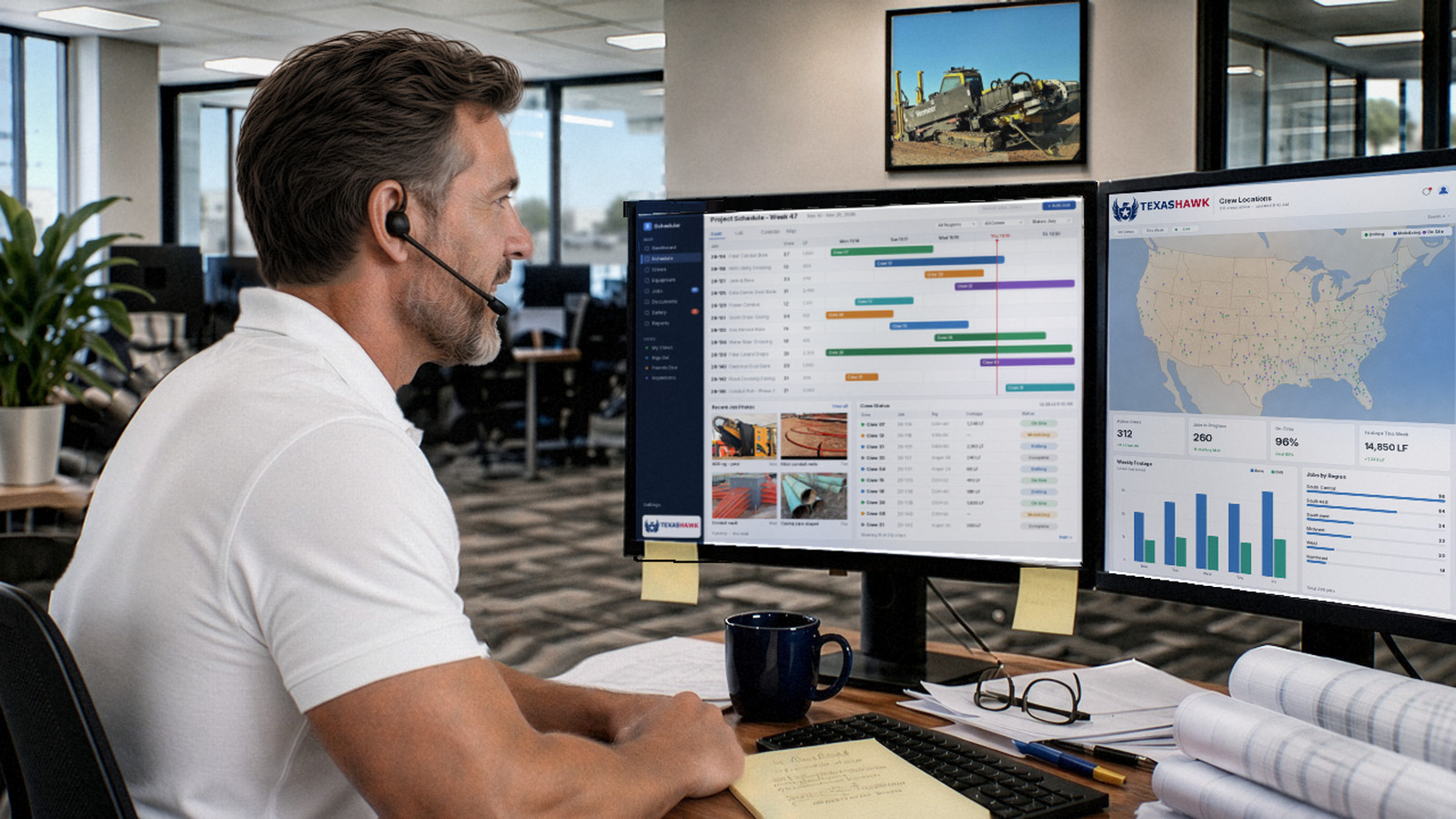
Texas Hawk operations exists to put the right crew and the right machine on the job, keep production visible, and hold one standard for how commercial and industrial underground work is planned and finished.
How a job moves through Texas Hawk operations — eight steps, from the first call to the records we hand over at the end.
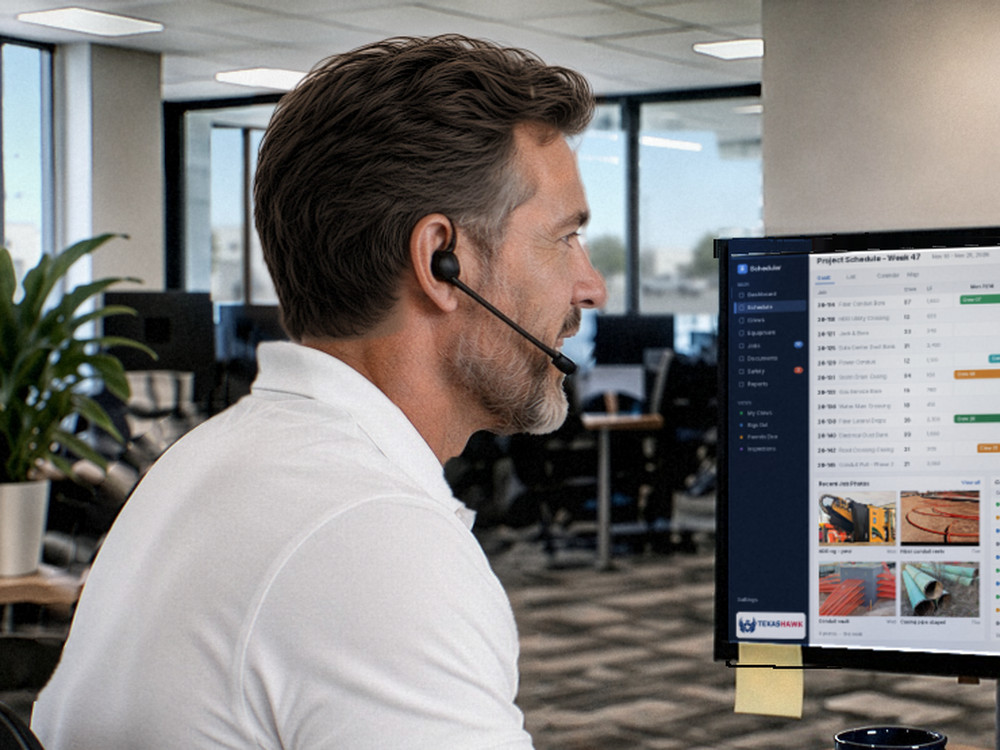
A project or program call reaches operations. We take the scope and start the clock.

We review the plans, the crossing or the site, and what the work will take.
Once the work is a fit, it is set up as a Texas Hawk project with a lead and a plan.
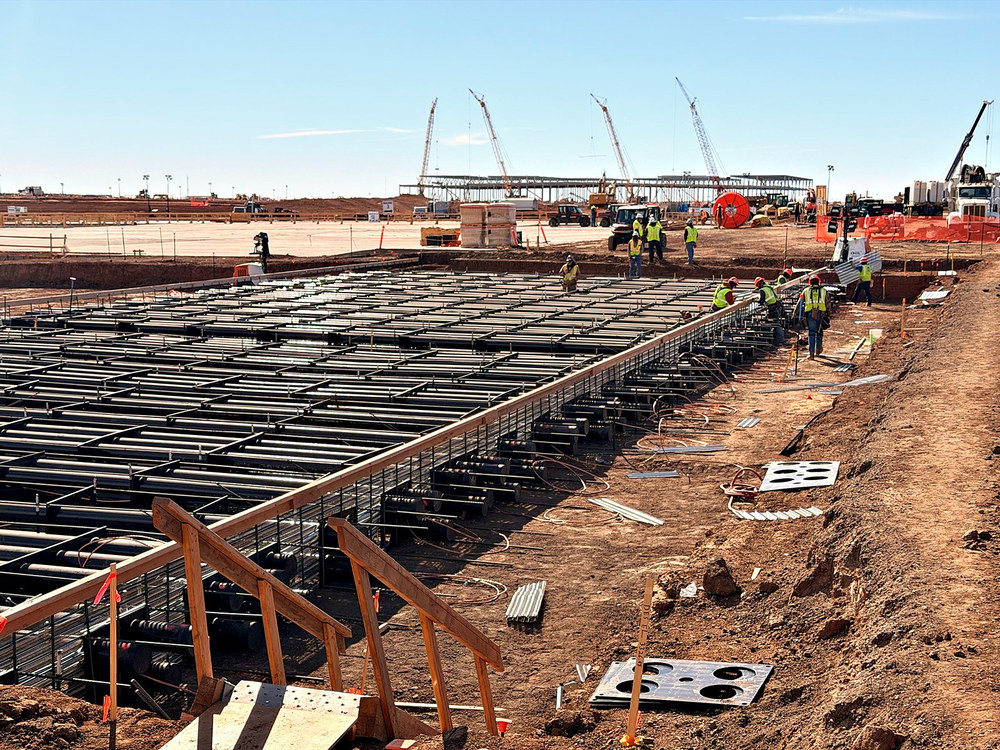
We match the crew to the market and the scope.
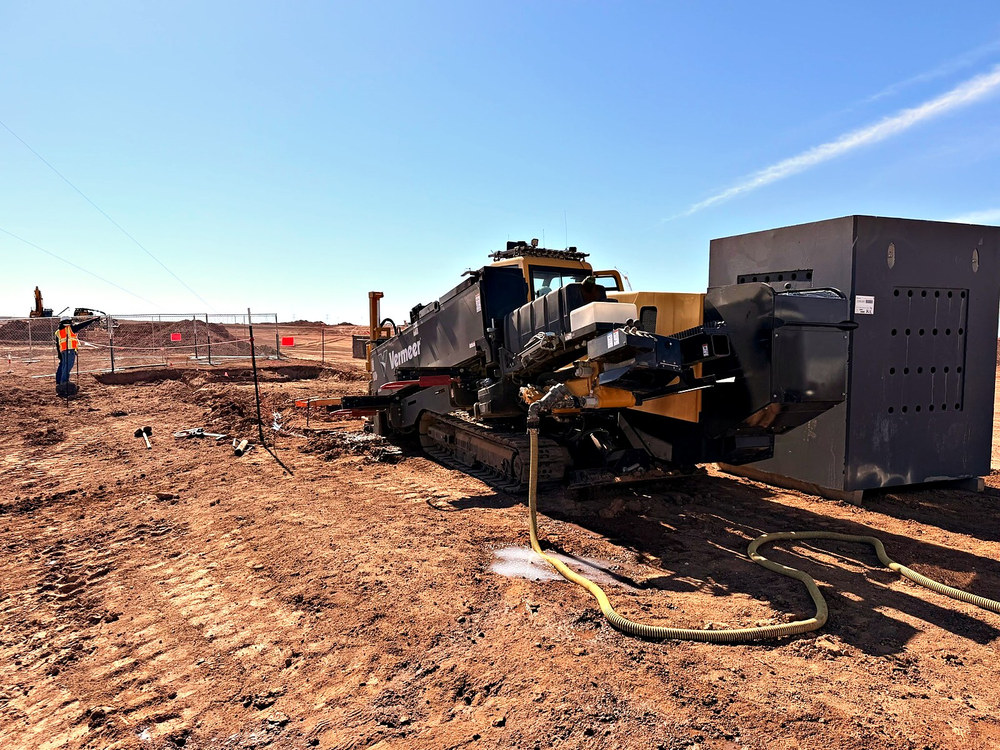
The machine is paired to the crossing or the site, not copied from the last job.
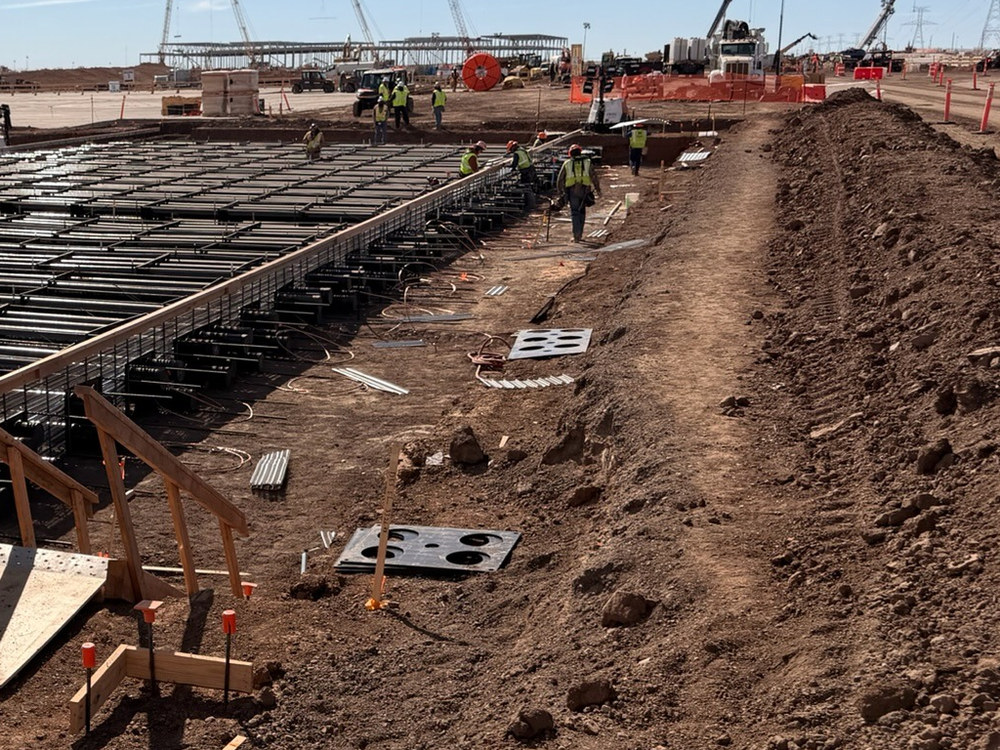
Boots on the ground. Production is recorded as it happens, and one lead stays with the work.
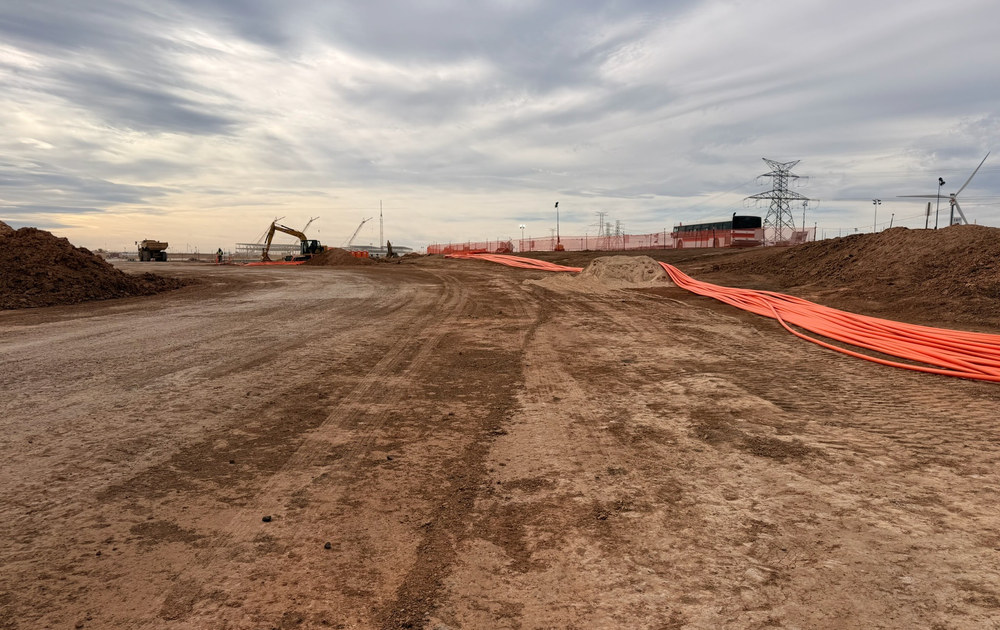
The work is completed to the planned path, and the product on the ground matches the plan.
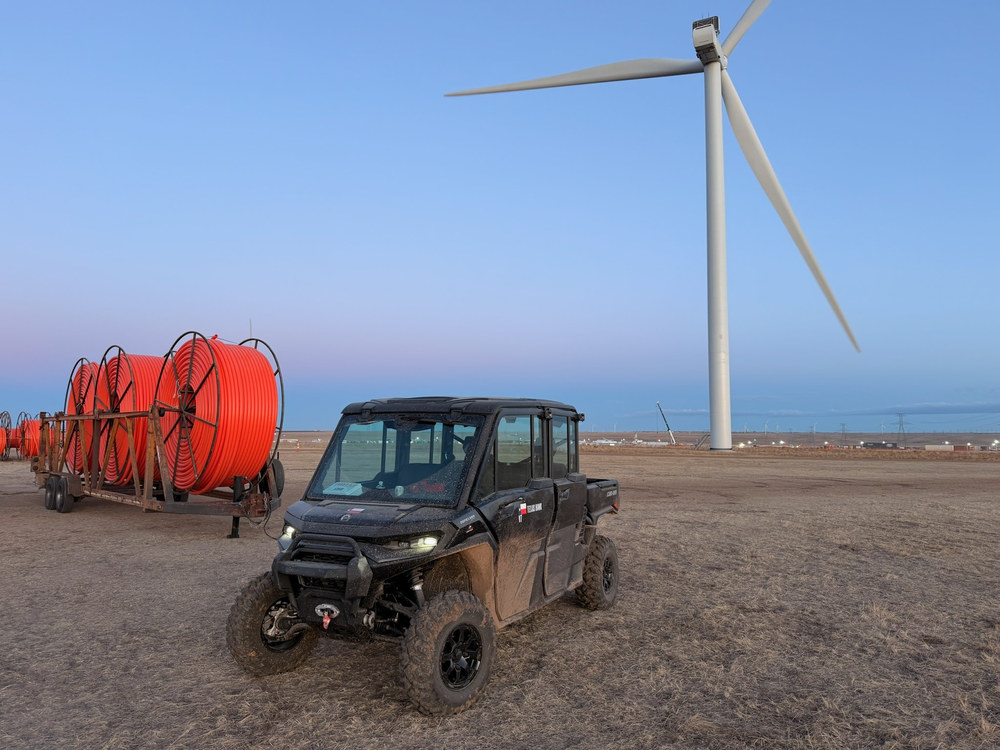
Records are handed over, the site is left as agreed, and the job is closed.
A single project lead, records that stay accurate, and the same expectations from start to finish.
The flow above is the path every job follows. Underneath it, one project lead stays with the work from start to finish, so questions have a single place to go and changes are documented. Locates and a site-specific plan come first. Daily production is recorded with cloud-based project software and a simple mobile app, so reporting stays accurate from the first bore to final footage. Close-out includes the records the owner or general contractor asked for at the start.
Capacity comes from our growing 300+ crew and a late-model fleet of HDD rigs, hydrovac trucks, and auger boring equipment, staged from yards across Texas and sent where the work is. We assess the crossing or the site and pair the machine and the crew to the conditions, rather than sending the same spread to every job.
Nationwide work is run to the same expectations we use at home: planning before the bore, trained people on the rig, and clear reporting. We are a lean, low-overhead operation, so coordination stays close to the work.
General contractors, owners, and program managers who already have a job underway — or who need help planning a sequence of work — can reach the operations team directly. For a new program or a first-time scope, Business Development is the better starting point. Safety questions should go to the Safety & Insurance page.
To reach operations, email info@gotexashawk.com. Please include the project or program name, the market, and what you need. For urgent field issues on an active job, call your Texas Hawk project lead or 817-268-9484.