

Commercial and industrial HDD for conduit, fiber, water, sewer and gas in Lubbock and across the South Plains, planned around caliche, playa lakes and the City’s right-of-way rules.
Texas Hawk is headquartered in Southlake and our crews are based in the Dallas–Fort Worth metroplex. Lubbock is a long haul west across the state, so for Lubbock County projects we plan the rig and crew mobilization into the schedule and price from the start. When a program outgrows one crew, our 300+ crew network can mobilize nationwide.

Lubbock County is part of the High Plains, a flat tableland. The USGS state geologic map shows that one formation covers nearly the whole county, with just a few small exceptions. Site soil borings set the final tooling and fluid program; this is the general picture.
The Blackwater Draw Formation is at the surface across about 93 percent of the county. It is a fine-grained, wind-laid sediment of silt, sand and clay, so the ground is fairly uniform on the surface, but what sits below it varies.
Caliche is soil cemented with calcium carbonate, and on the High Plains it forms hard layers at varying depths within otherwise soft ground. A bore can run through soft soil and then meet a hard caliche band, so tooling and a schedule that allows for it matter.
Lubbock County is dotted with playa lakes, shallow closed basins that collect storm runoff. Playa floors hold Randall clay, an expansive, sticky soil that is wet after rain and cracks when dry, so bores near playas get extra attention on fluid control and depth.
The Ogallala Formation covers about 4 percent of the county. It is a sand, gravel and caliche formation that sits under the Blackwater Draw, and can bring harder, coarser ground into a deep bore.
The Blanco Formation covers about 1 percent of the county, and alluvium, sand dunes and playa deposits about 0.2 percent combined. They are small, but sandy dune areas and drainage lows change how a bore behaves locally.
Soil data drives the bore profile, tooling, drilling fluid and vacuum capture. Caliche and wet playa clay change the schedule, so we price and plan for it up front.
In Lubbock the City’s right-of-way ordinance is explicit about boring, and the utilities in the county are a mix of a municipal system, a co-op and investor-owned companies. Each owner has written rules, and we line them up early so they do not hold up mobilization.
A right-of-way permit is required for work in City right-of-way, including boring. Narrow exemptions exist for routine work that causes under an hour of traffic interference or is under 16 inches deep, but they do not cover pavement breaking, boring, or equipment beyond hand tools or a vibrating plow.
The City requires contractor registration, insurance, drawings showing route and depth, and a One Call ticket in the excavator’s own name.
Boring must not weaken the right-of-way. The City’s ROW coordinator is notified 48 hours before work starts and the inspector 24 hours ahead.
Lubbock Power & Light owns the electric grid inside city limits, South Plains Electric Cooperative serves rural areas, and some surrounding areas are served by Xcel Energy. Atmos Energy provides natural gas.
Playa lakes are closed storm-drainage basins, so drainage crossings and low spots are common on the plains. We check how a bore crosses a playa or drainage way before choosing the alignment and depth.
Lubbock County is in TxDOT’s Lubbock District with Bailey, Castro, Cochran, Crosby, Dawson, Floyd, Gaines, Garza, Hale, Hockley, Lamb, Lynn, Parmer, Swisher, Terry and Yoakum counties. Work in state right-of-way is permitted through TxDOT’s utility process.
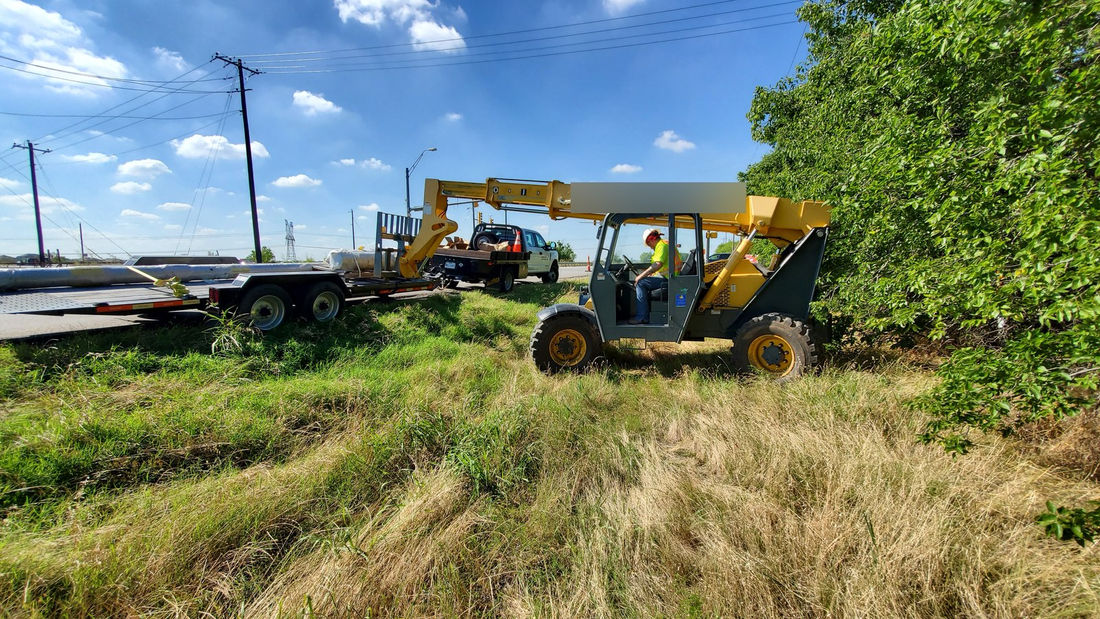
Lubbock is the hub city of the South Plains, with commercial and industrial projects in town and long, open-country utility runs around it.
Plans, utility records and soil data reviewed up front, with the bore set to the City’s rules and the caliche and playa conditions.
Texas811 notice at least two working days ahead, a One Call ticket in the excavator’s name, and City of Lubbock paperwork started early.
Bore the path, track it, and capture drilling fluid so it stays out of playas, ditches and storm drains.
Daily production reports and as-builts for close-out.
Yes. A right-of-way permit is required for work in City right-of-way, including boring.
Only narrow routine work is, and the exemption is lost if the work involves pavement breaking, boring, or equipment beyond hand tools or a vibrating plow, so boring needs a permit.
The City’s ROW coordinator 48 hours before work starts and the inspector 24 hours ahead, and a One Call ticket must be in the excavator’s name.
It can be. Caliche is cemented calcium carbonate that forms hard layers in soft ground, so we use soil borings to plan tooling and allow for it in the schedule.
Playa floors hold expansive clay and collect runoff, so we plan crossings, depth and fluid control around them.
Commercial and industrial projects only: developers, general contractors, utilities and electrical, telecom and mechanical contractors.
Commercial projects only. Fill out the quick form or call us — we’ll take it from there.